Blog
Coyote Point Hikes for the Curious Visitor
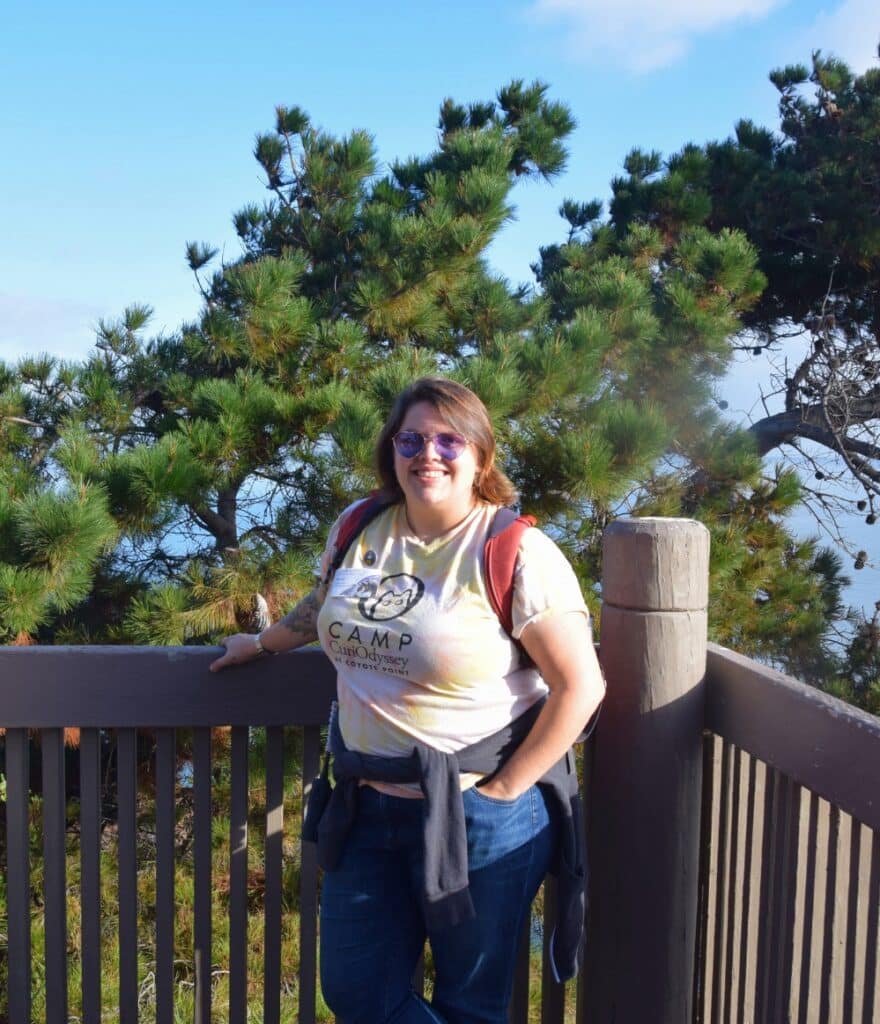
Written by Emma Hanisch
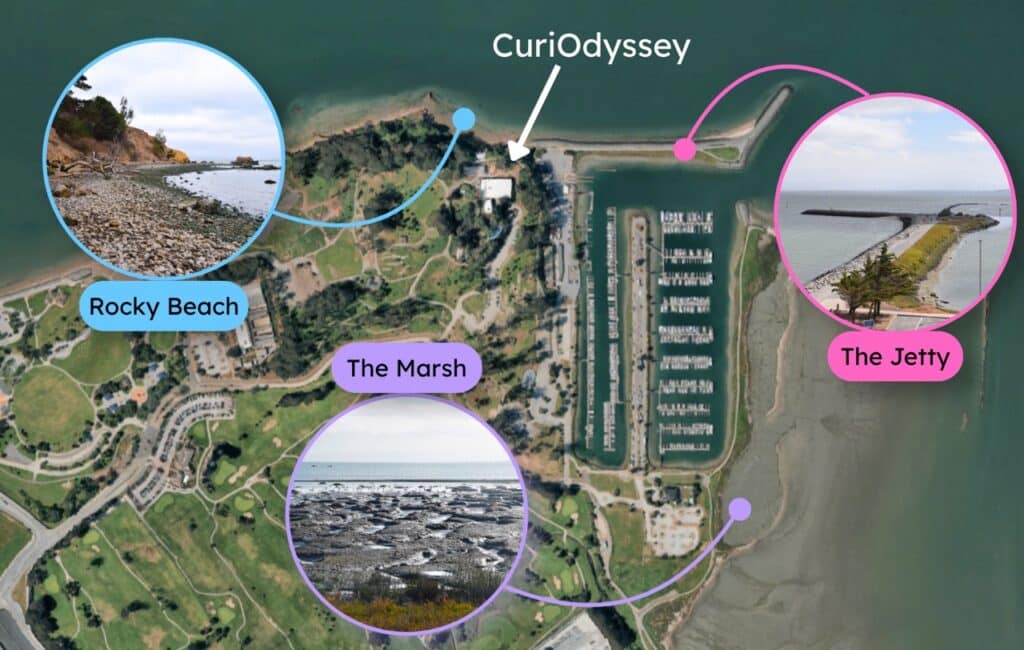
CuriOdyssey is a great place to visit, but did you know that there are a bunch of other cool spots around Coyote Point where you can discover the natural world? This post covers three places within a 10-15 minute walk of CuriOdyssey’s front gate – each with their own unique features.
Heads up! High tide can cover these places or make them inaccessible, so check the tides in Coyote Point Marina before you go.
The Marsh
How to get there:
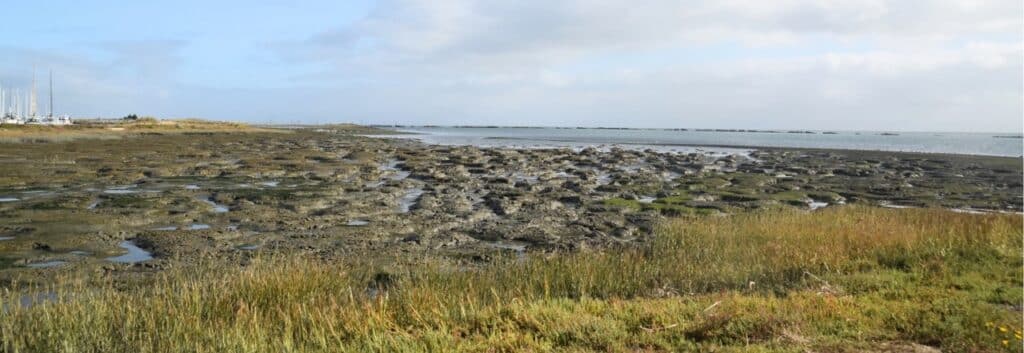
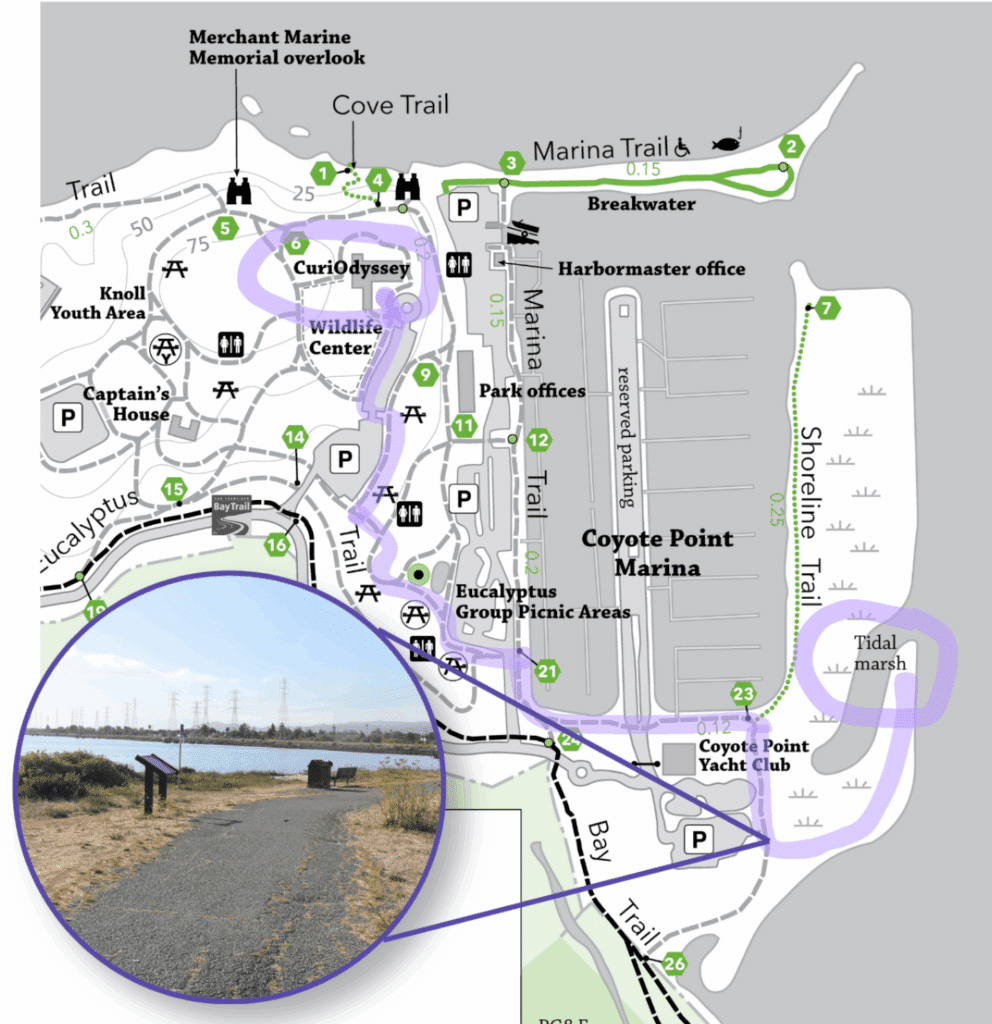
The Marsh is past the marina and the Yacht Club building, along the Marina Trail and Shoreline Trail. You can enter the higher parts of the Marsh using the small, unpaved trail across from the Yacht Club parking area. It’s marked by a sign, trash can, and bench.
Things to see:
- Birds: The Marsh provides food for all kinds of birds, including pelicans, egrets, herons, avocets, killdeer, godwits, wimbrels, plovers, and many more. Almost 300 species of birds have been documented at Coyote Point.
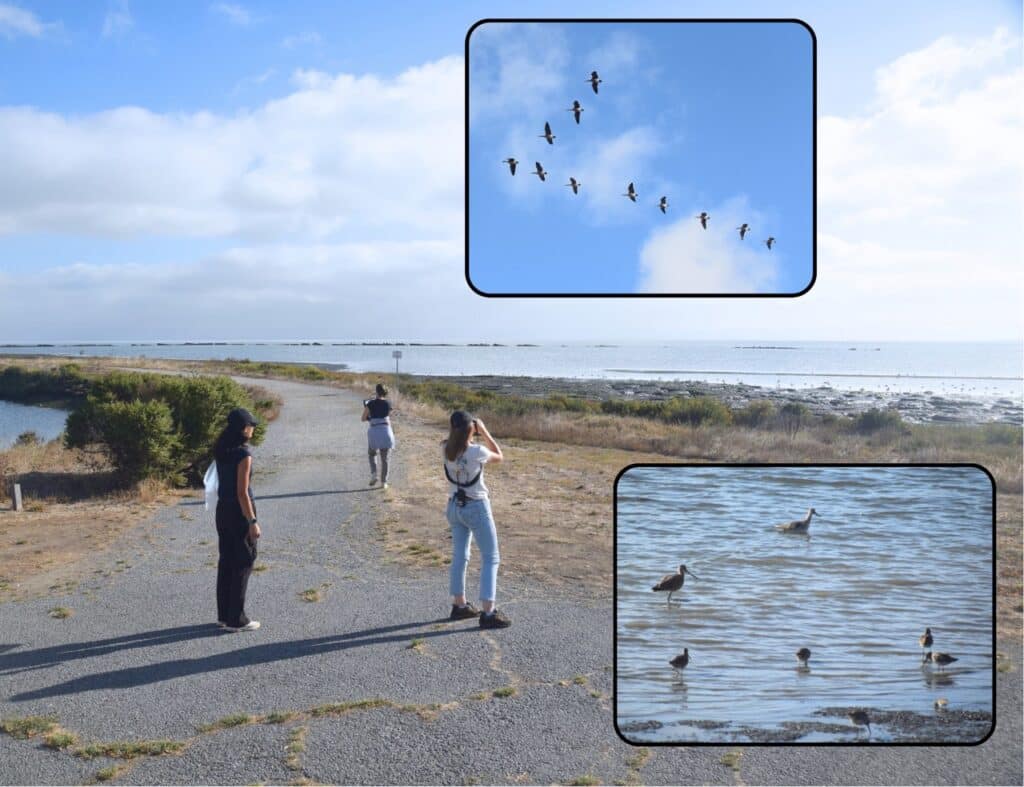
- Tracks: All kinds of wild animals visit the Marsh for food. See if you can spot the tracks of birds, raccoons, or even coyotes in the mud.
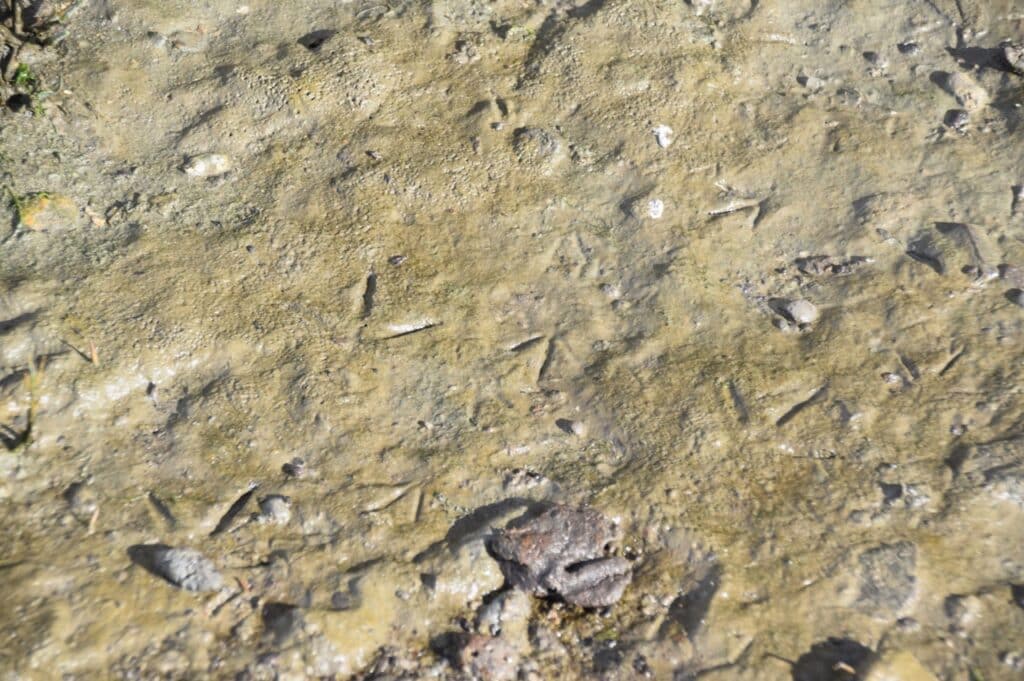
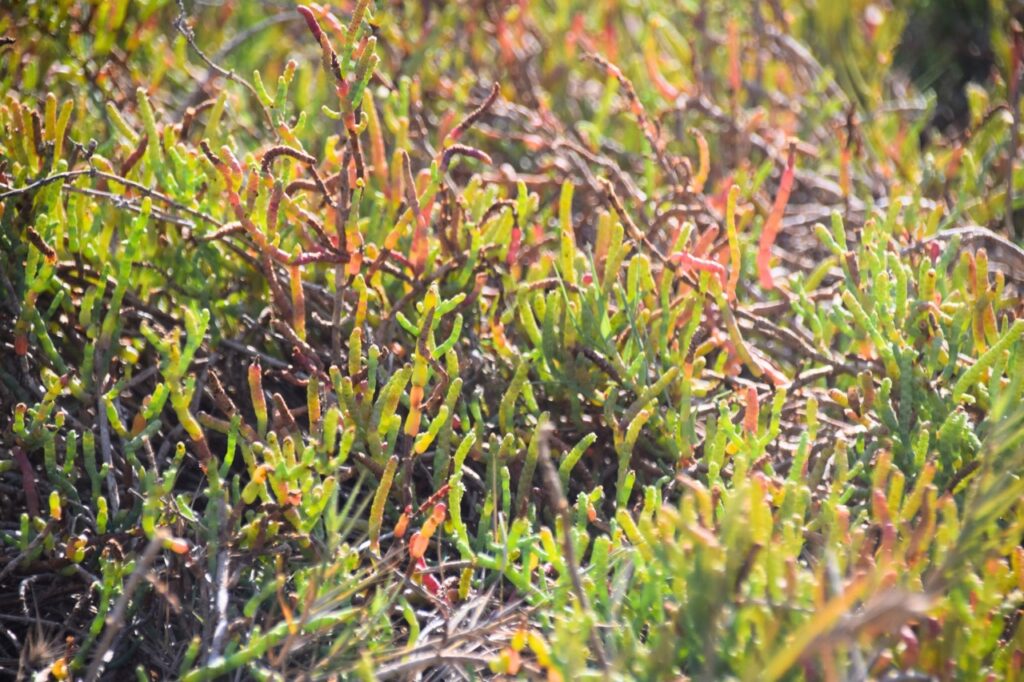
- Salt-adapted plants: Pickleweed and salt grass grow all around the marsh, and they get their water from the salty bay. Salt grass secretes the extra salt onto its leaves, and pickleweed stores the salt in its round stems.
Marsh science:
- Coyote Point is a stop on the Great Pacific Flyway – the seasonal migration route that birds follow up and down the West Coast. It takes a lot of energy to fly hundreds of miles, so many birds stop at wetlands like the Marsh to eat and rest.
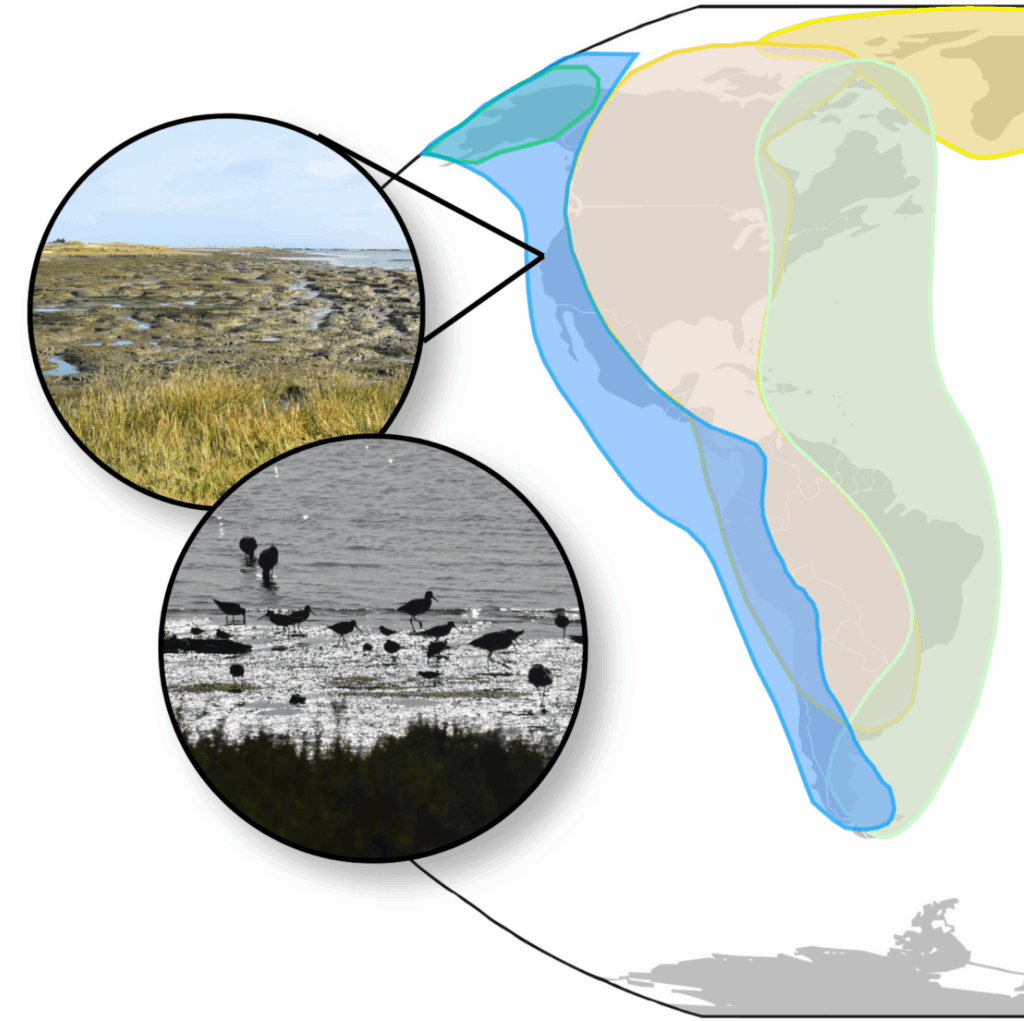
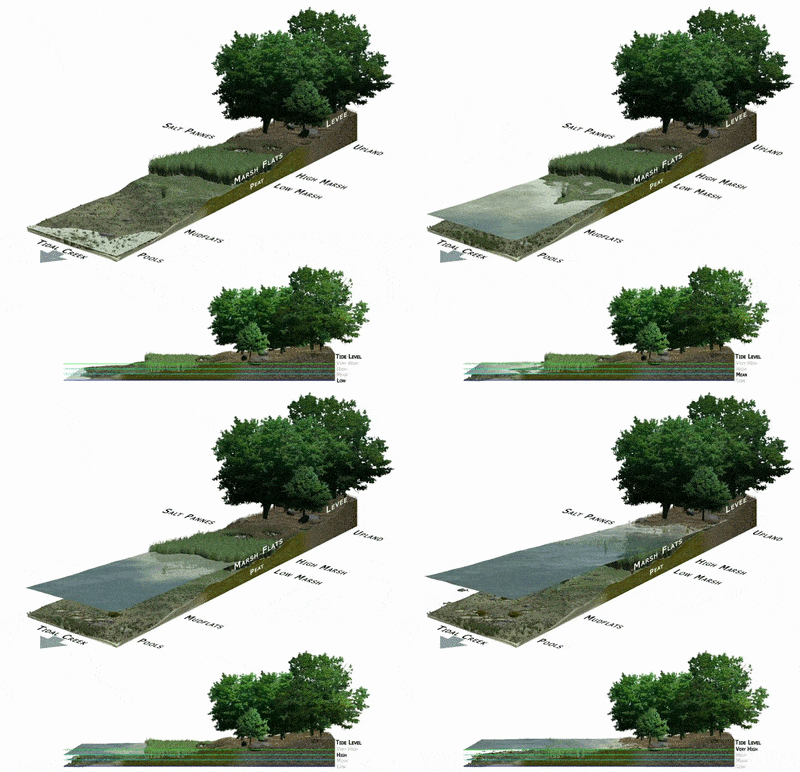
- Salt marshes form where sediments collect, often near where rivers meet the sea. Coyote Point used to be an island, and the (relatively) calm waters around it built up mounds of mud on all sides. Much of the historic marsh was filled in for farmland in the late 1800s.
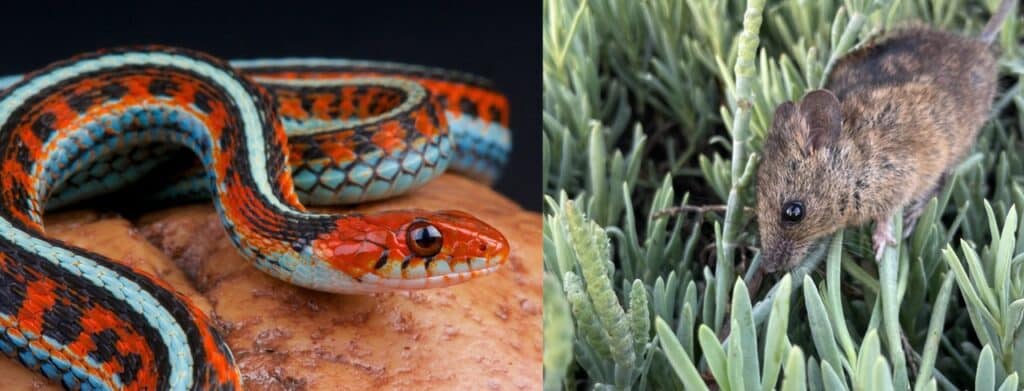
- The Marsh is home to two endemic animal species: the salt marsh harvest mouse and the San Francisco garter snake. These animals only live in the South Bay Area and nowhere else in the world.
Know before you go:
- The Marsh is full of sticky, slippery, deep mud, so wear shoes that can get muddy and that will stay on your feet. If you venture off the path, step carefully to test the ground before you put your weight there.
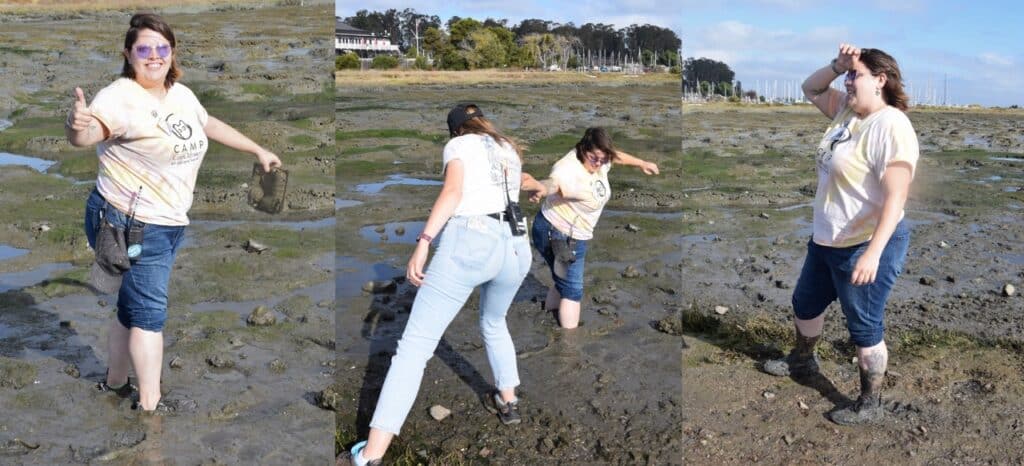
- The path leading from the paved trail into the Marsh is narrow and uneven.
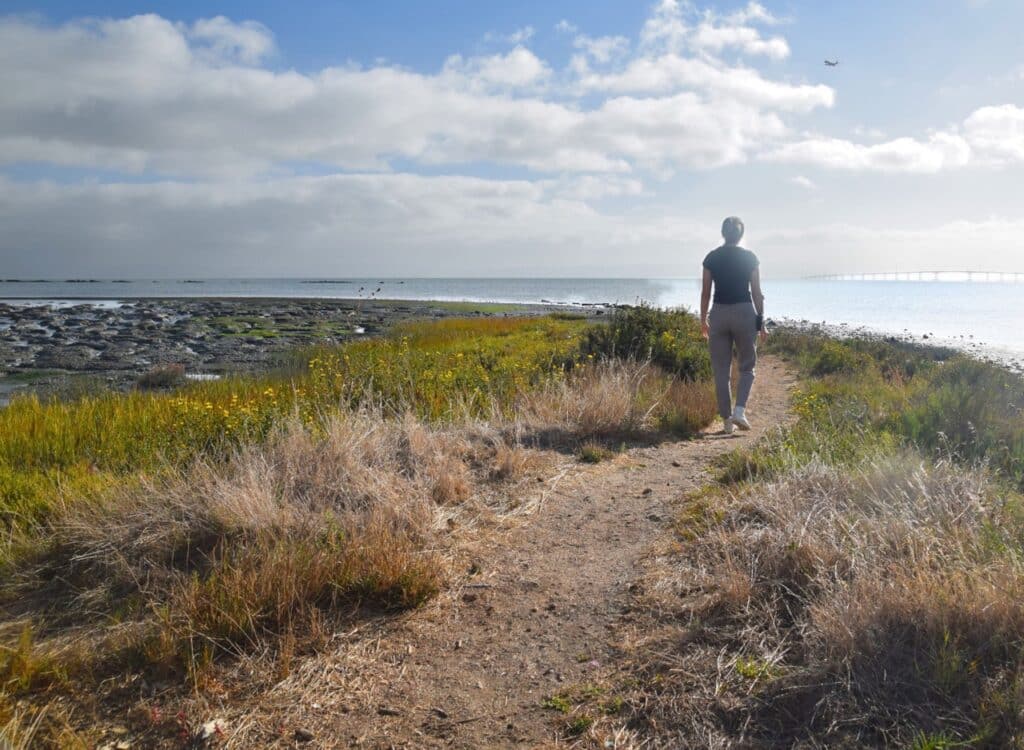
Want to go to the Marsh with a guide? CuriOdyssey hosts Public Marsh Hikes once a month, outside of summer.
The Rocky Beach
How to get there:
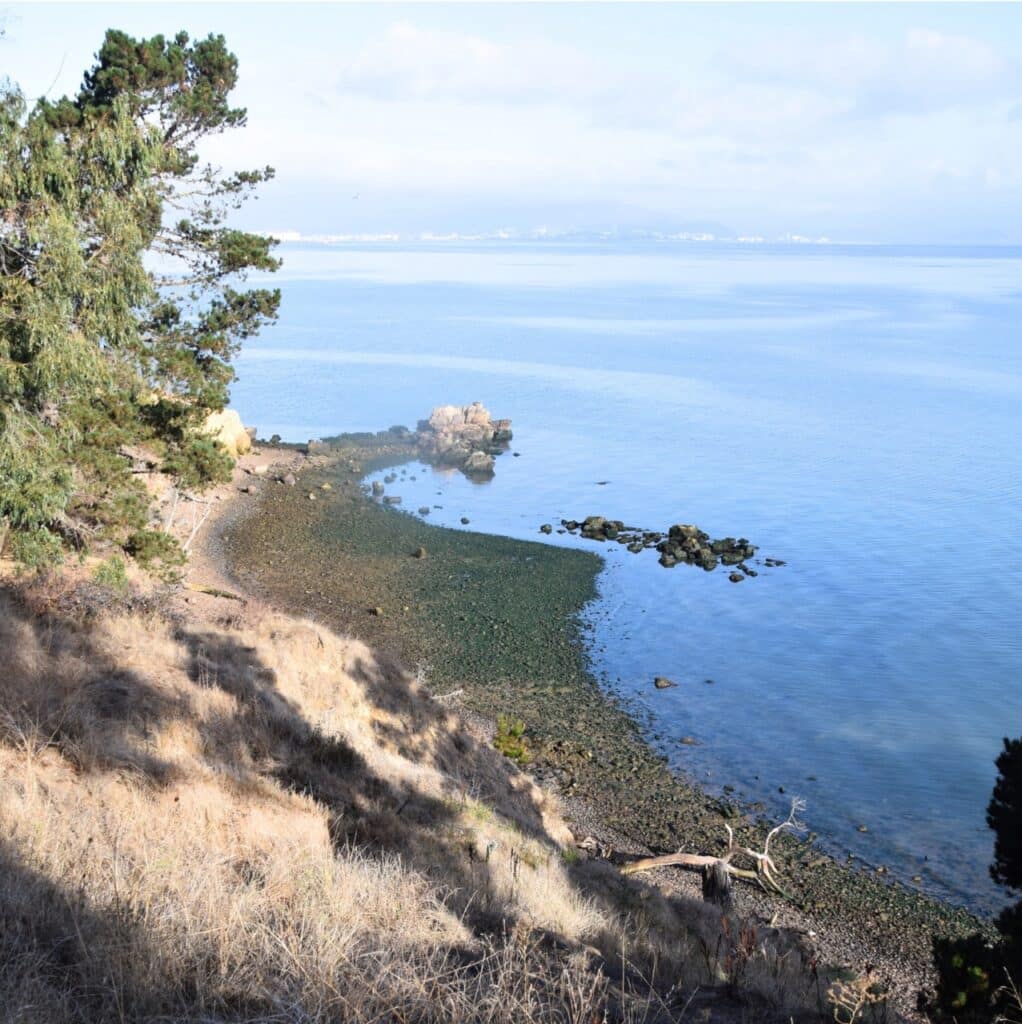
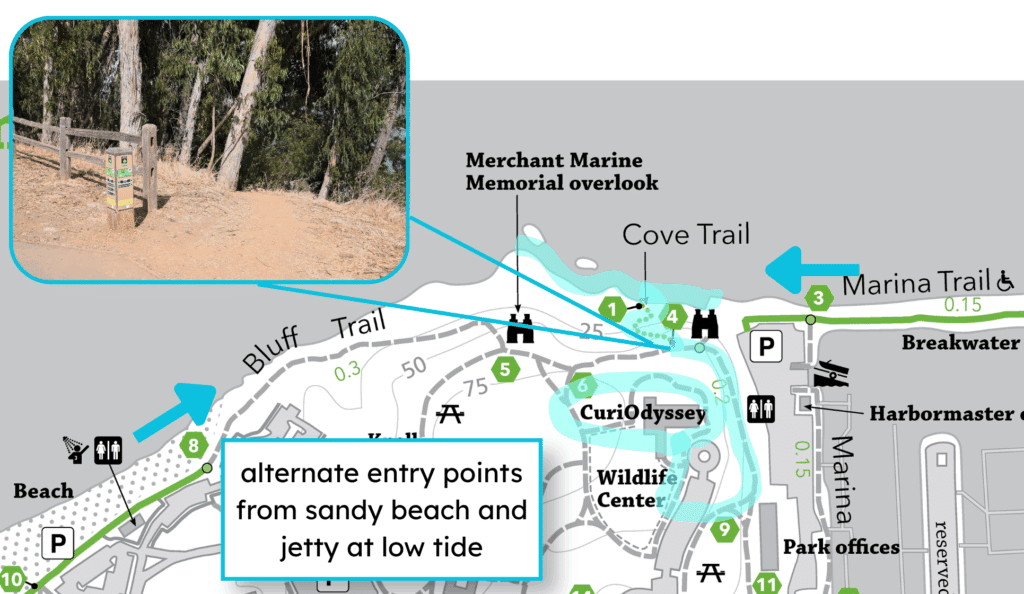
Head down the Cove Trail behind the Bay Gallery (the blue building at the back of CuriOdyssey). You can also reach Rocky Beach from the parking area by the Jetty or from the right end of the sandy beach near the park entrance.
Things to see:
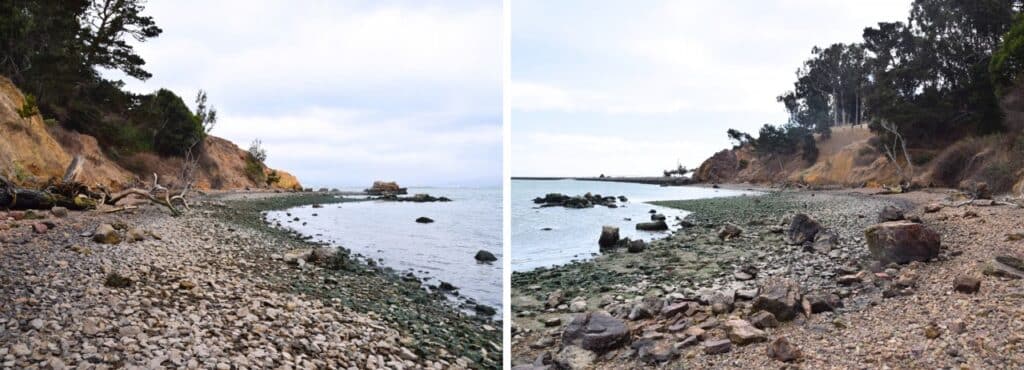
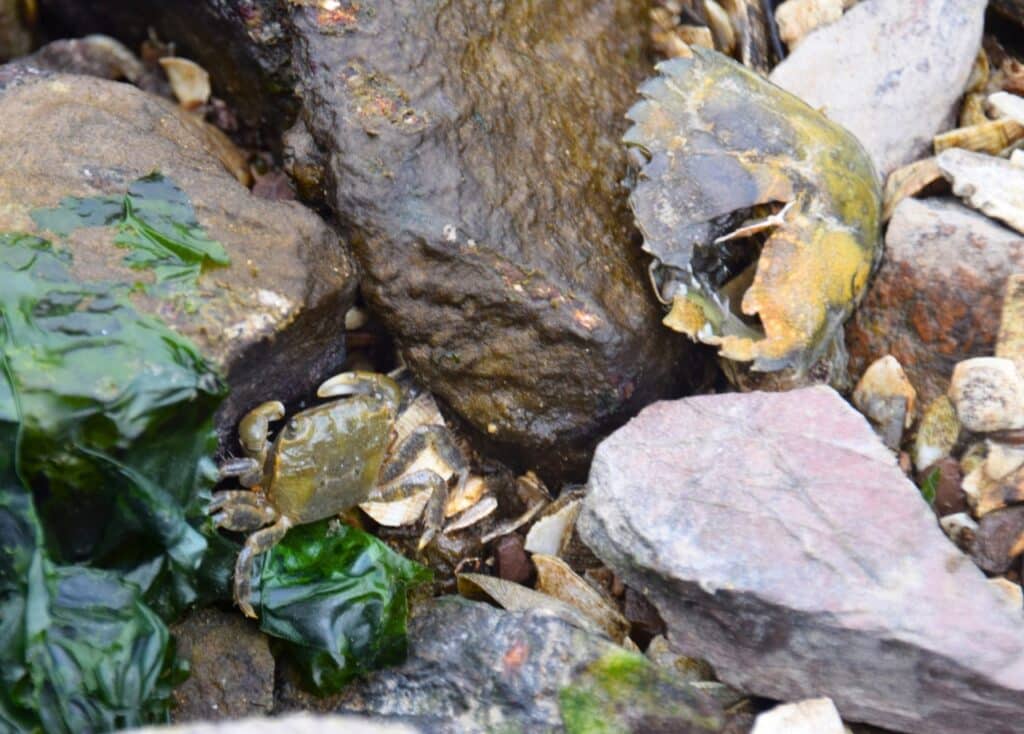
- Crabs: These tiny yellow and green shore crabs are all over the place, but you may not see them unless you pick up rocks near the water. Move rocks slowly and gently to see what’s underneath.
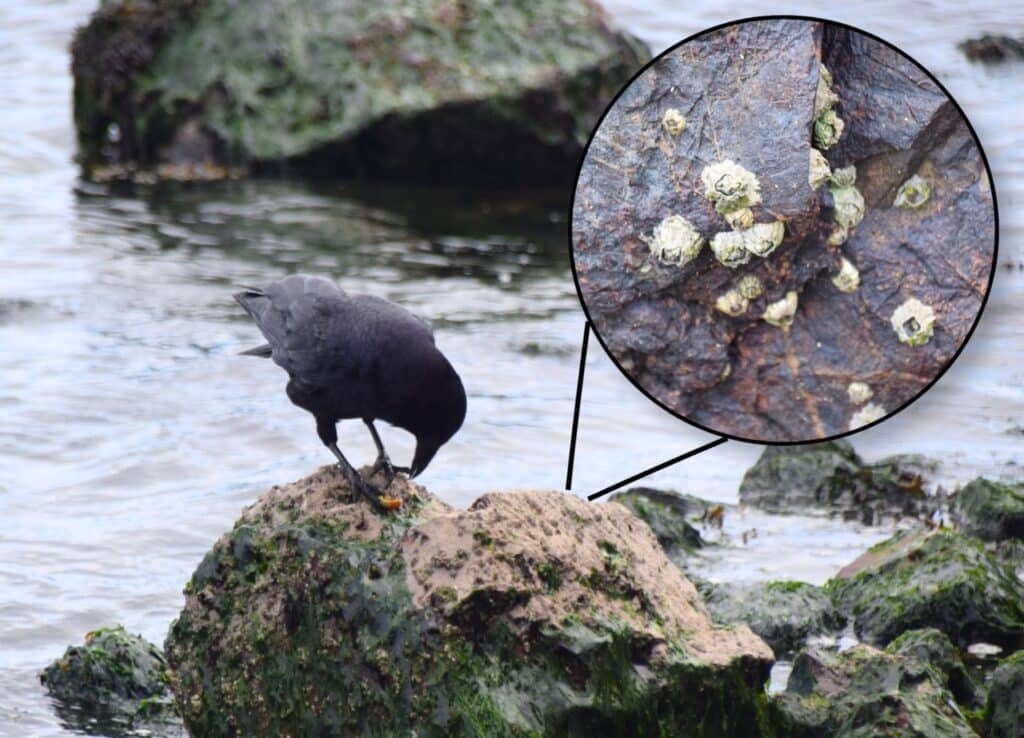
- Intertidal life: Some animals live on rocks that are underwater at high tide, but are exposed at low tide. Barnacles, marine snails, and ocean isopods are adapted for both wet and dry conditions.
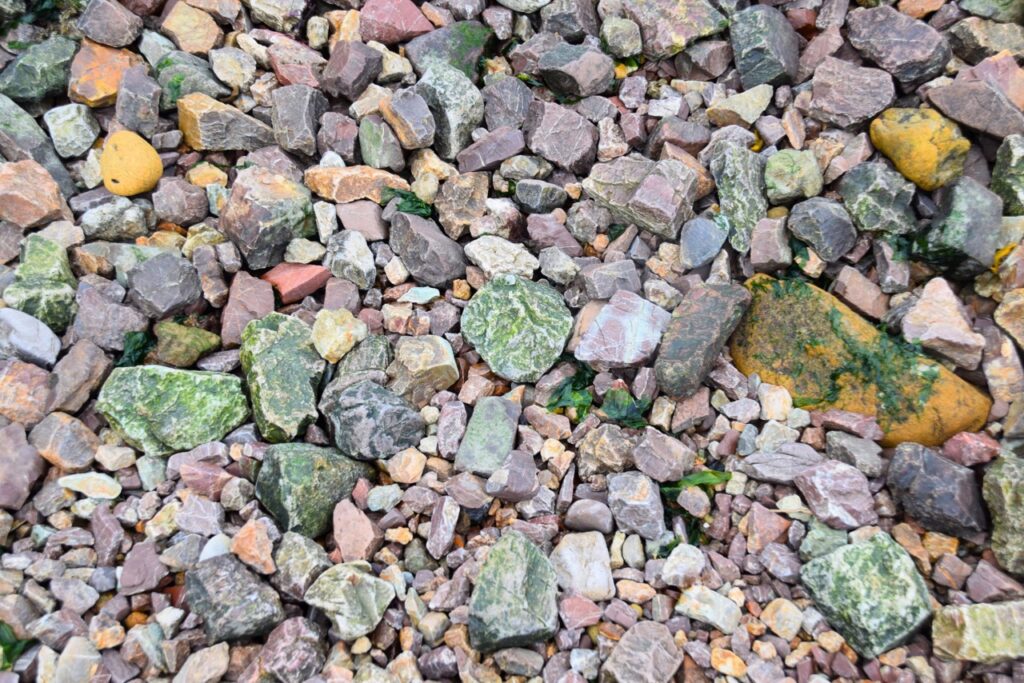
- Colorful rocks: The colors come from mixes of different minerals in the rock, like iron for red, magnesium for green or black, and silica for lighter grays and tans.
Rocky Beach science:
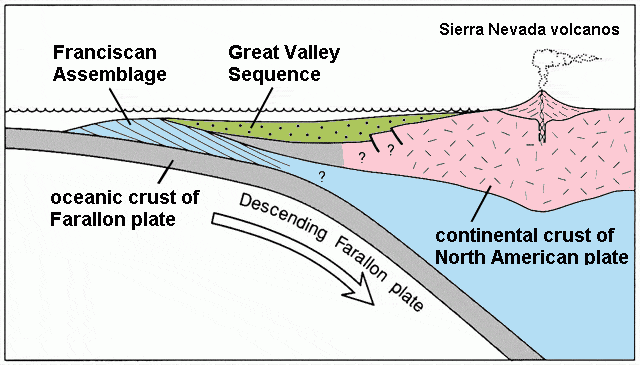
- A camper asked me an amazing question this summer: “How did the rocks get here?” I didn’t know the answer, so I read a whole book about it (Building California by John McPhee). Coyote Point is part of the Franciscan Assemblage: a messy formation of different rock types that were mushed together as they collided with North America.
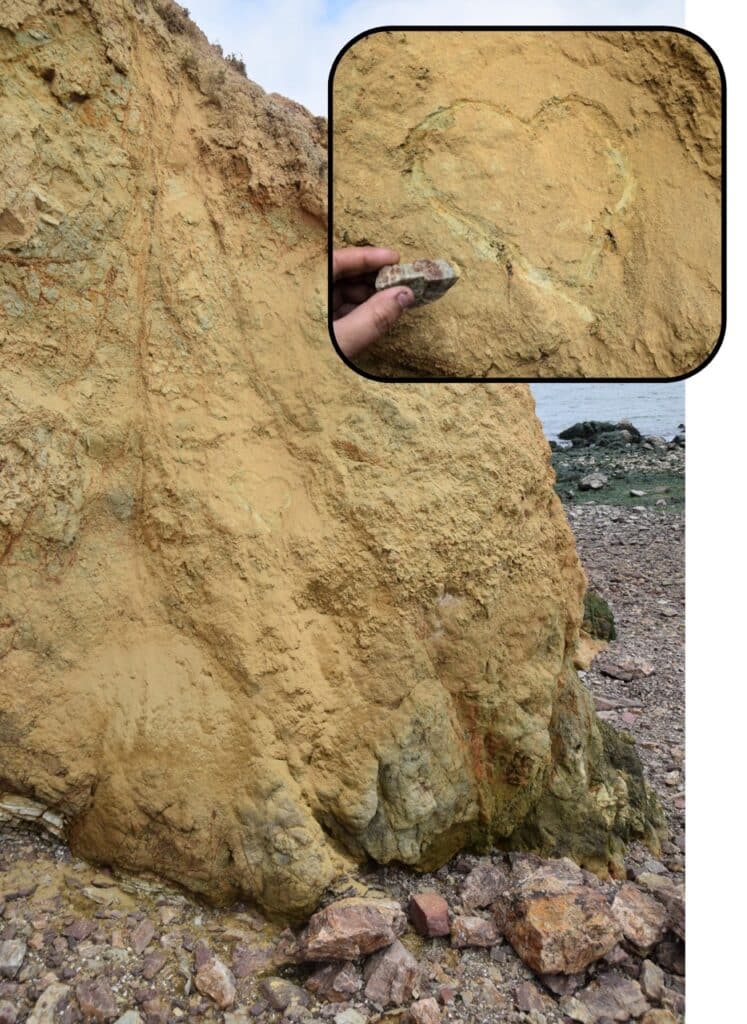
- Some of the rocks on the beach have washed ashore, but most eroded out of the hillside. The wind and waves strip away softer rock like sandstone, leaving the harder rocks behind. You can see this happening at the yellow sandstone bluff to the left of the Cove Trail.
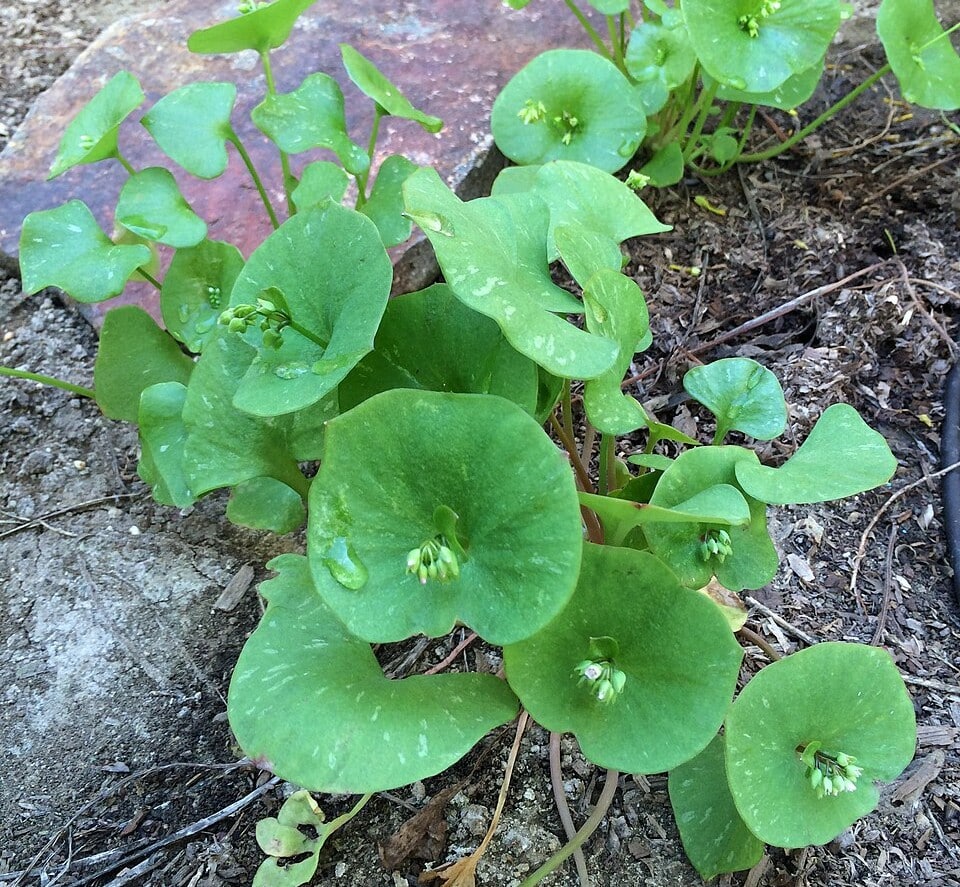
- People have been visiting Coyote Point for at least 4,000 years. The Ohlone, the original people of the San Francisco Peninsula, use local, native plants for food and medicine. Sticky monkey flower can help treat digestive issues and burns, and laurel leaves provide a natural insect repellent.
Know before you go:
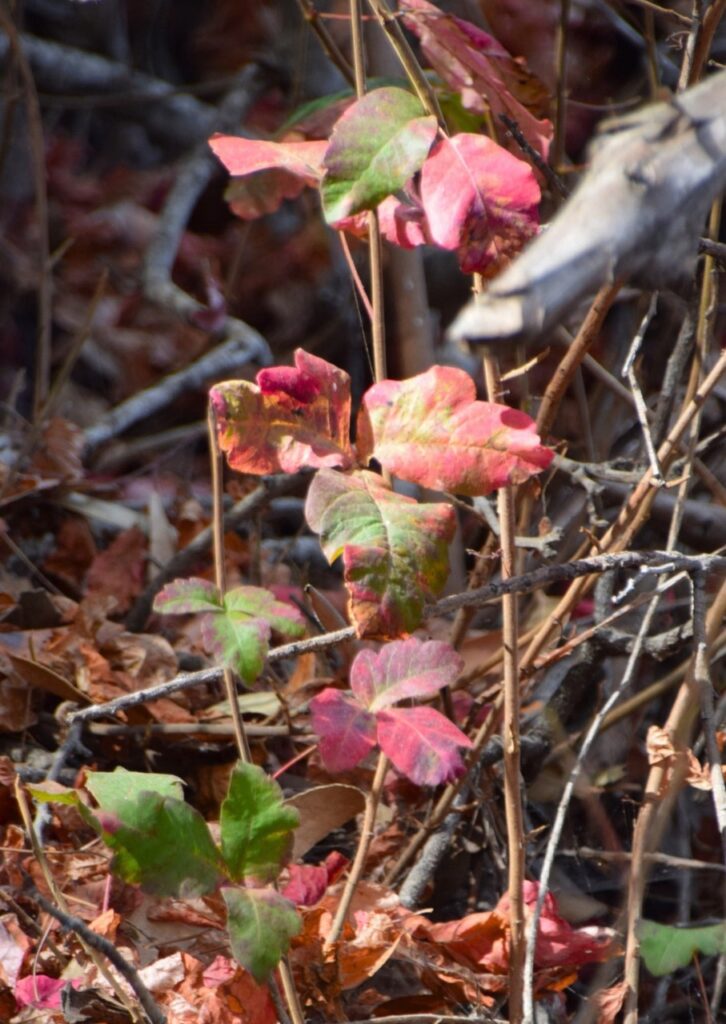
- The hillside above the Rocky Beach is home to poison oak, which can give you an itchy rash if you touch it. We leave the poison oak growing on the hill because it’s a native plant, but we clear it off the trail. If you stick to the path, it’s easy to avoid.
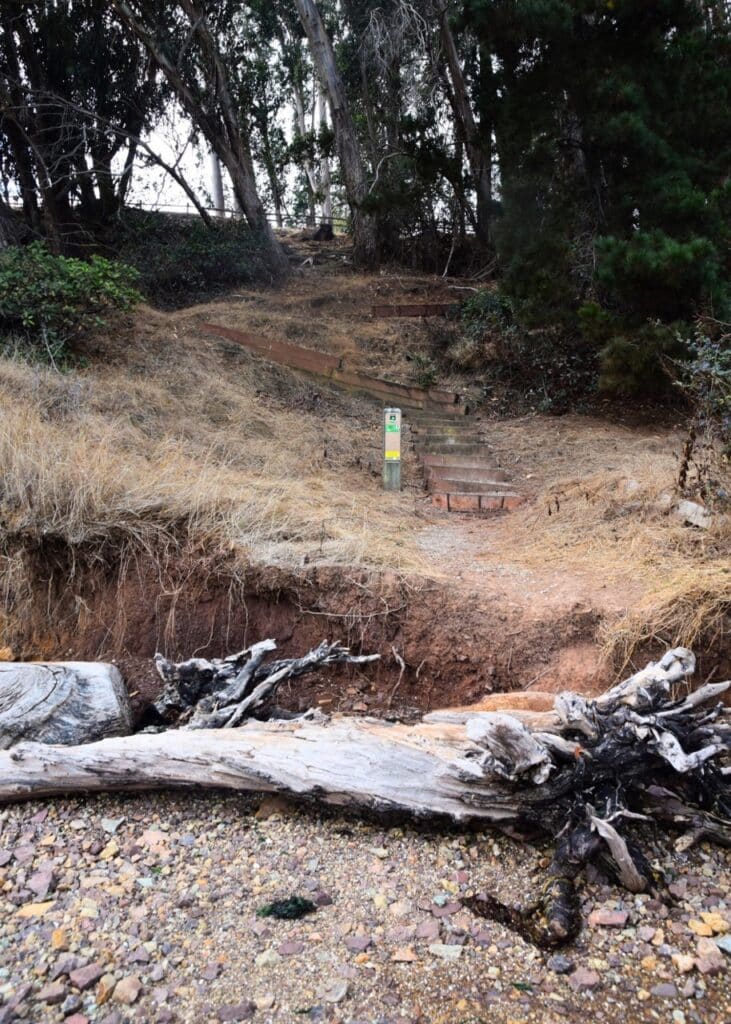
- The Cove Trail is short, but steep and narrow. The lower portion is made of stairs, and there’s a big step down onto a log at the bottom.
The Jetty & Shell Beach
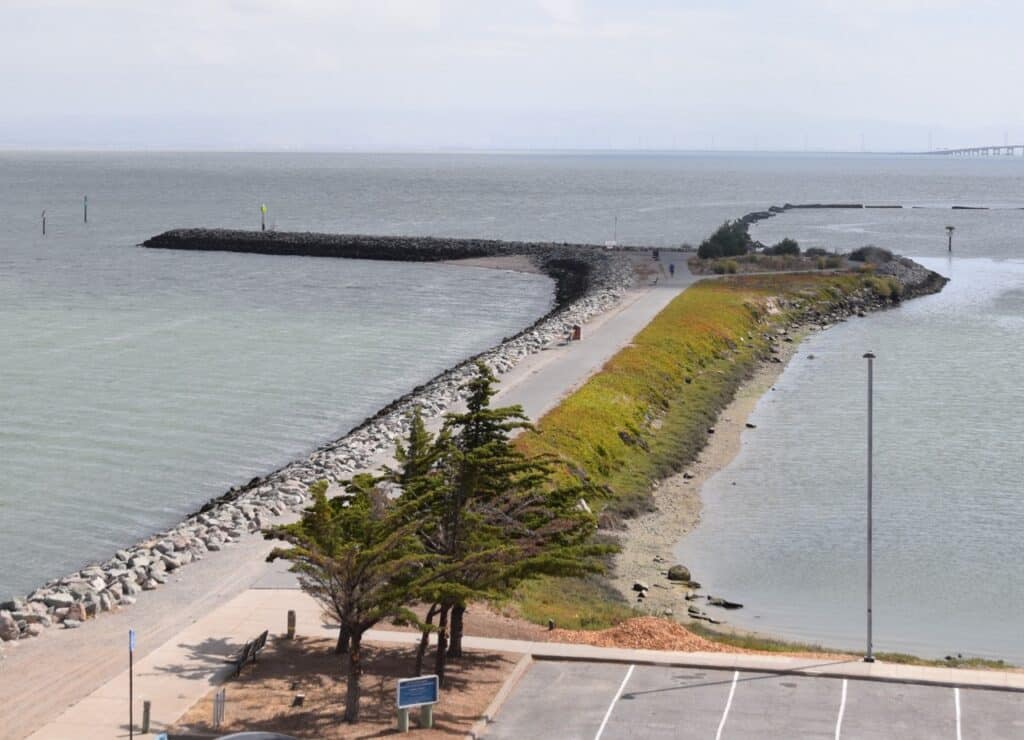
How to get there:
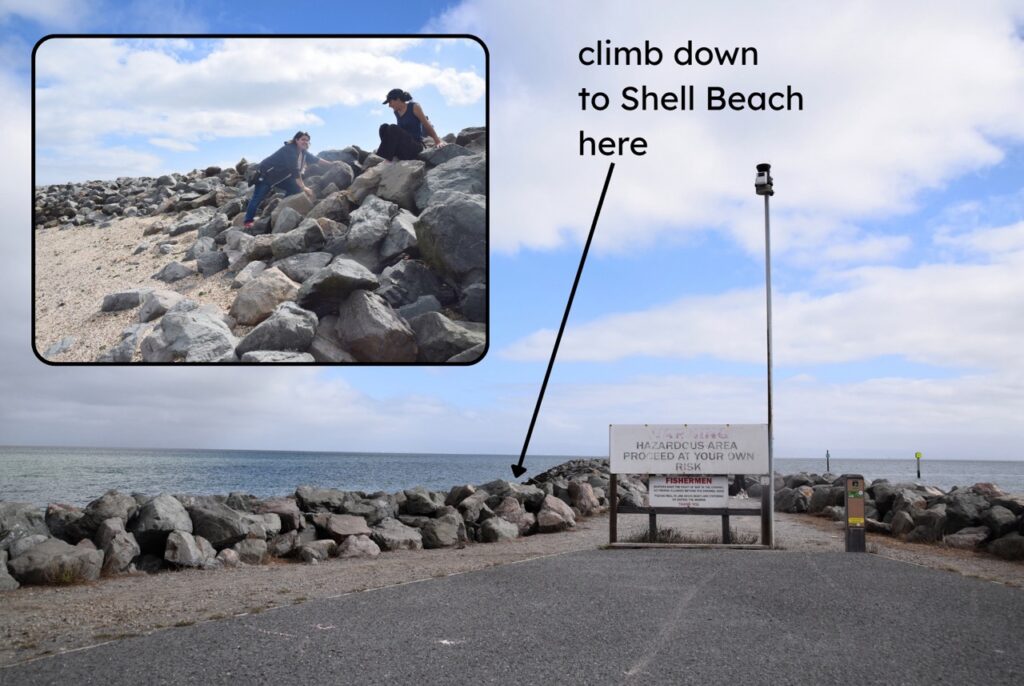
From CuriOdyssey, head down to the marina and go all the way to the left, past the boat launch. The paved Marina Trail leads out onto the Jetty. If you want, you can climb onto the boulders past the end of the trail, either to Shell Beach or to the very end of the Jetty.
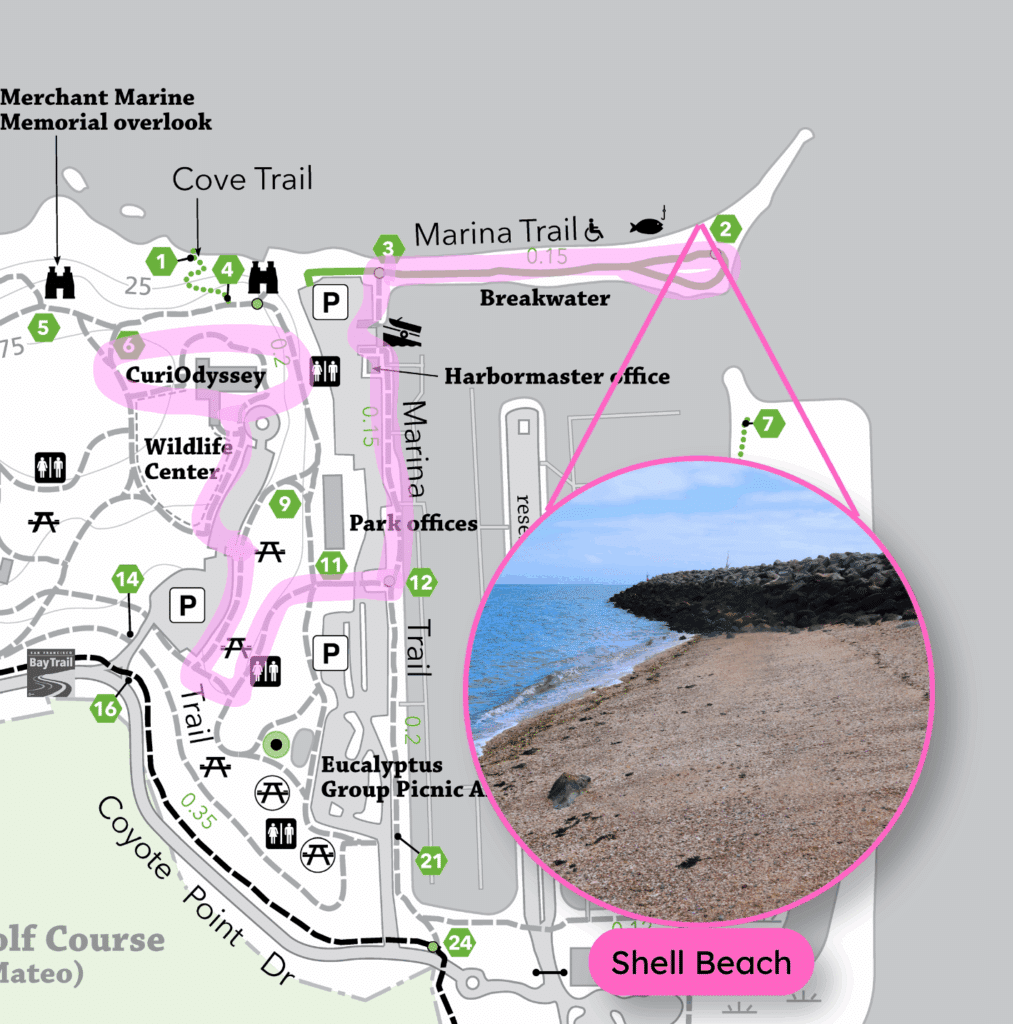
Things to see:
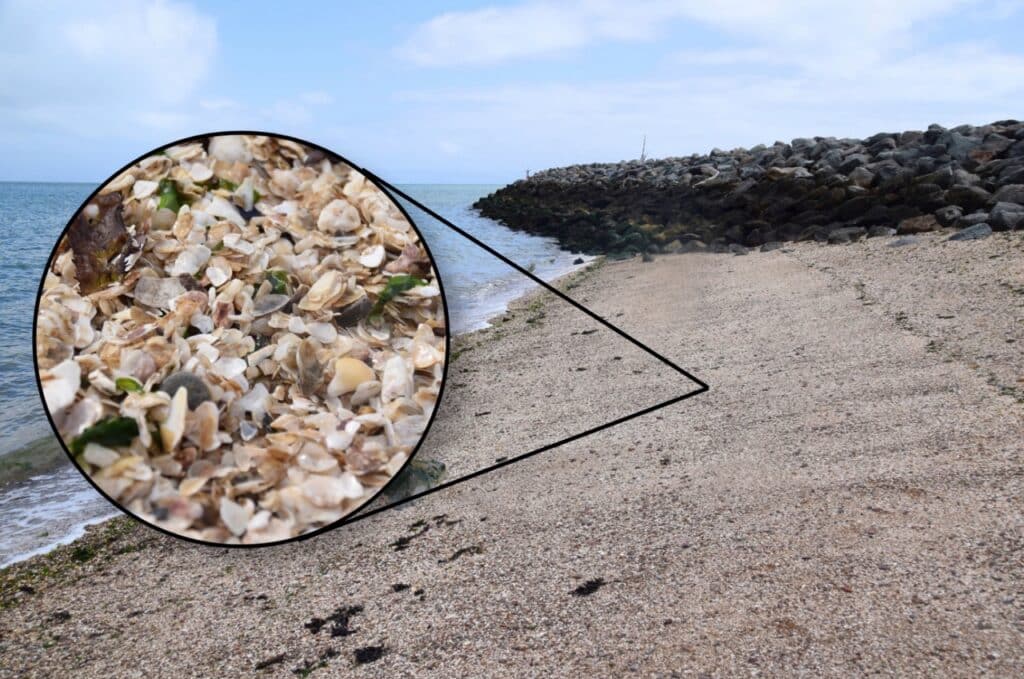
- Shells and seaglass: The bend in the jetty collects things from the waves, forming a beach. The beach is made almost entirely out of seashells, with a sprinkling of smooth seaglass.
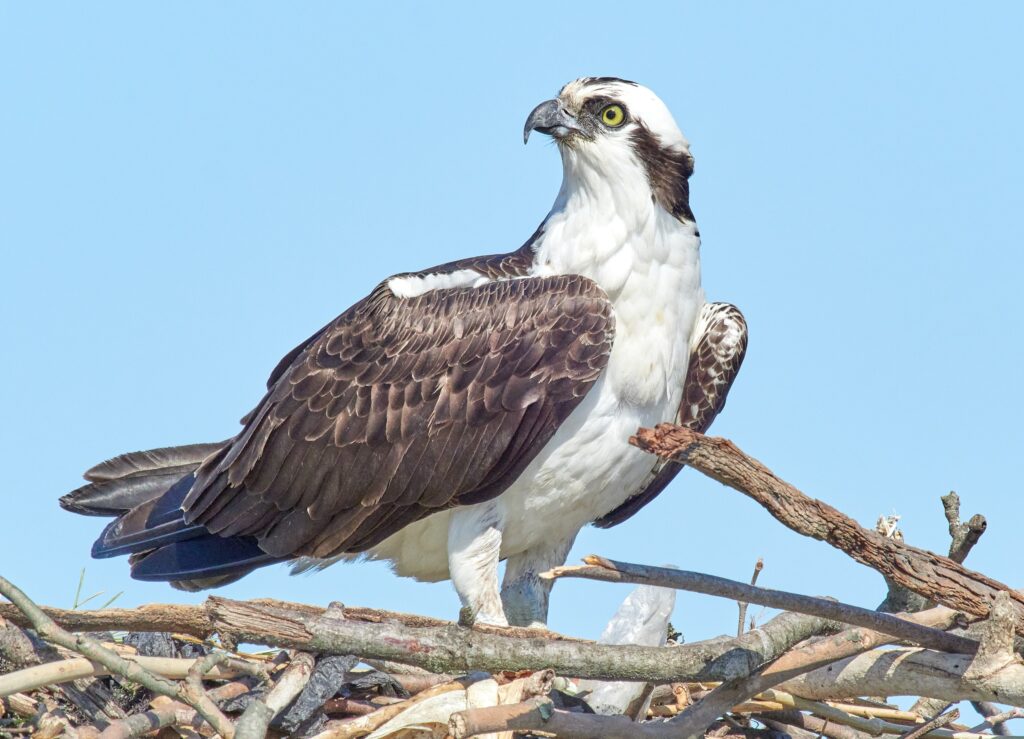
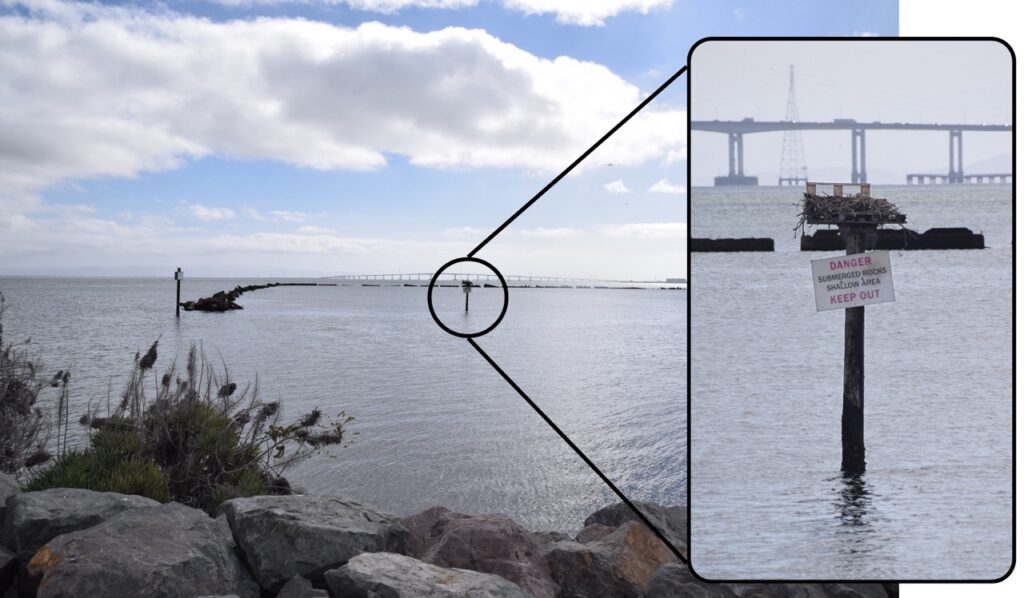
- Osprey nest: If you look at the channel marker halfway between the Jetty and the spit across the marina, you’ll see a nest made of sticks. Ospreys return to that nest every year, usually arriving in February and leaving in August or September. If you visit in spring or early summer, you might even see a chick!
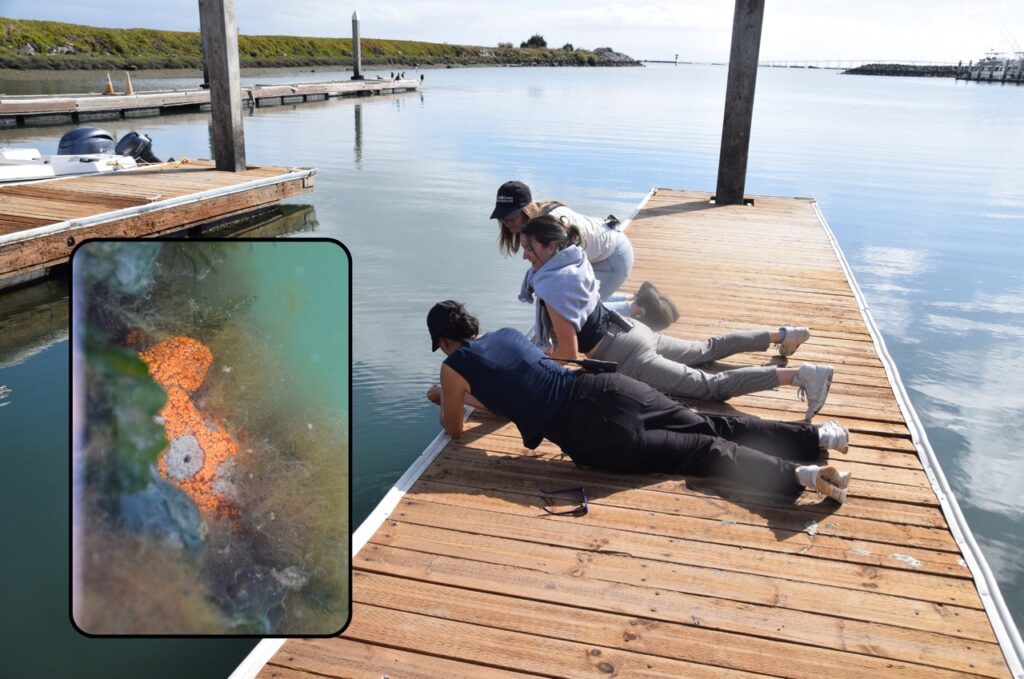
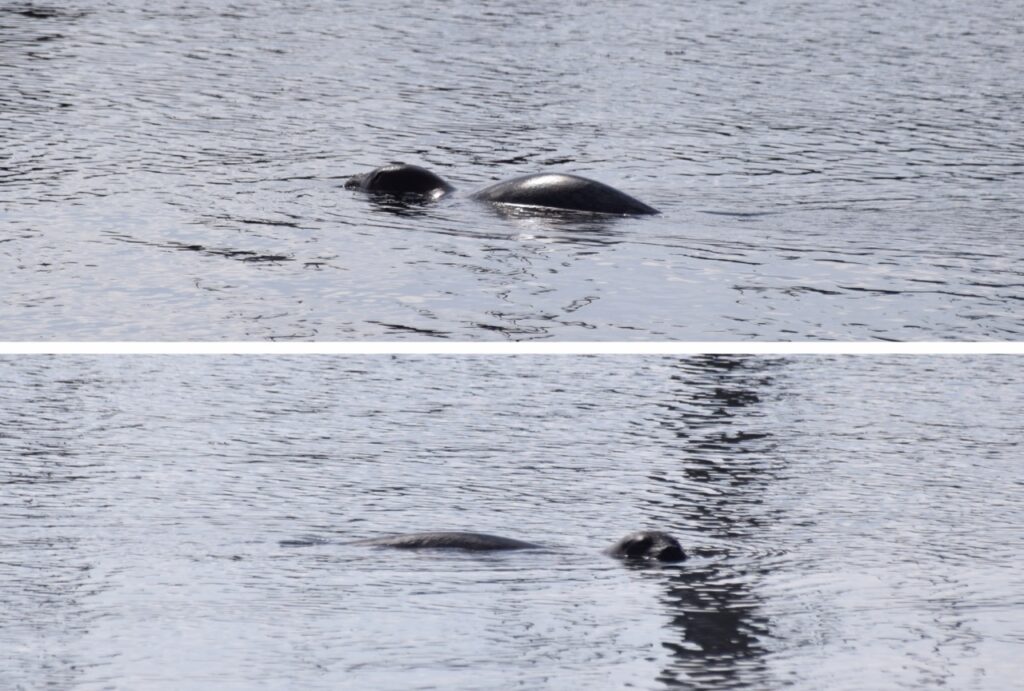
- Boat ramp discoveries: The boat ramp near the Jetty is a great place to do “belly science” and peer at sponges, tunicates, and other small critters in the water. Keep an eye out for bigger ocean animals too, like harbor seals or bat rays.
Jetty science:
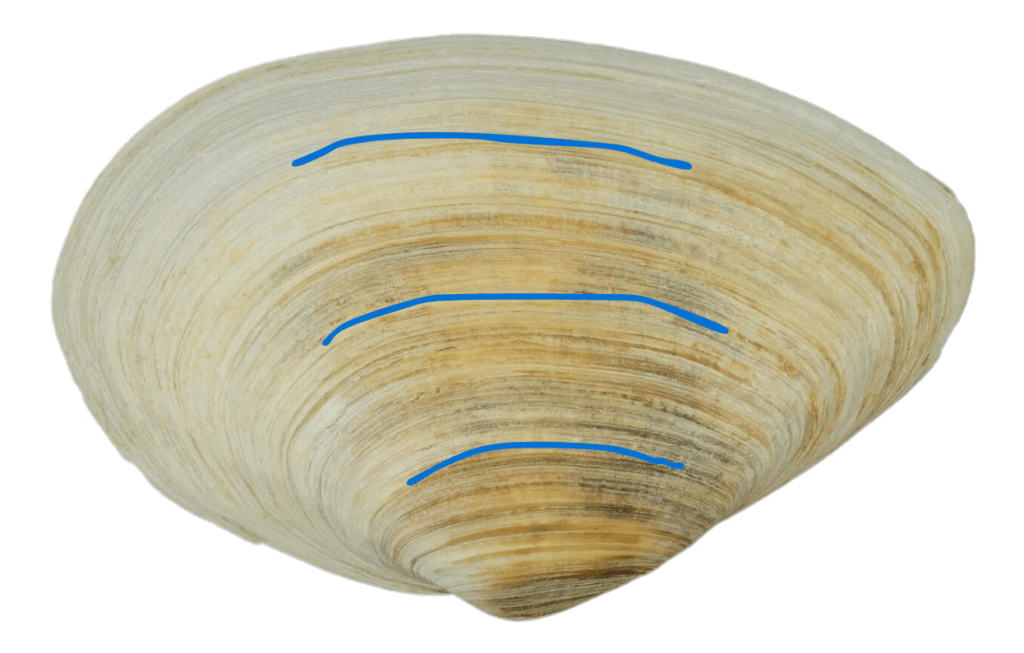
- Where do shells come from? Animals like snails, clams, and oysters build them out of a hard mineral called calcium carbonate and special proteins. When the animals die, their shells can wear down into sand, or they might stack up to build natural chalk or limestone.
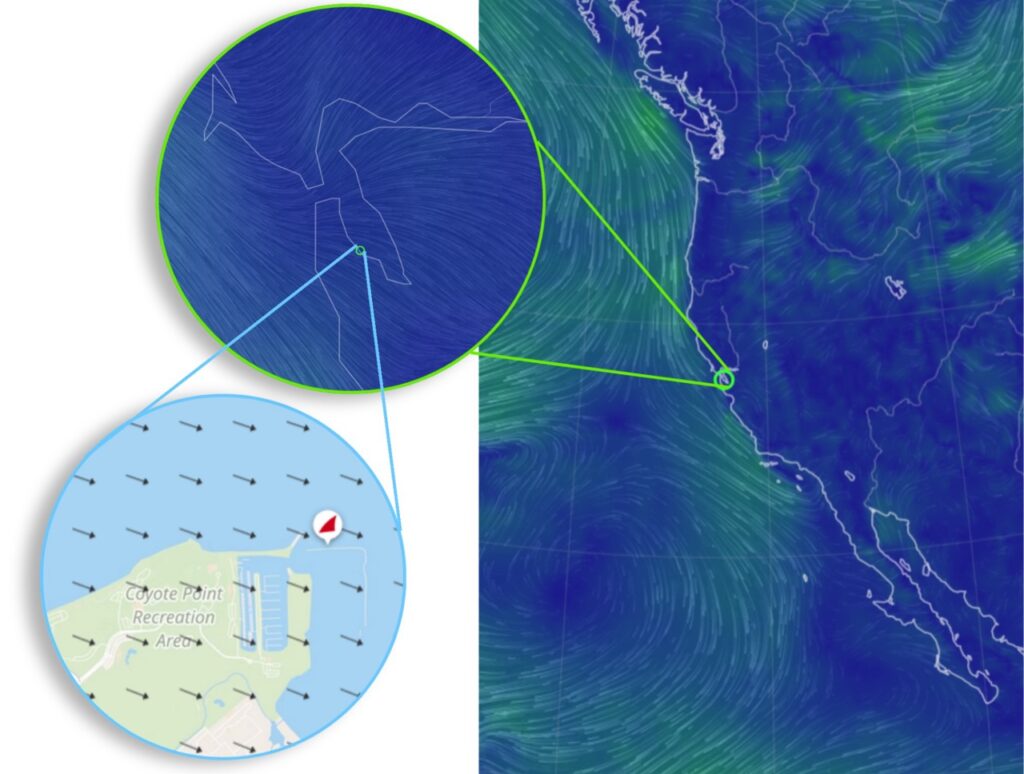
- When you stand on the jetty, you can feel the wind and see the waves moving from the northwest (near San Francisco) to the southeast (toward the inner Bay). When planes land at the nearby SFO Airport, they like to fly into the prevailing wind to keep their path stable.
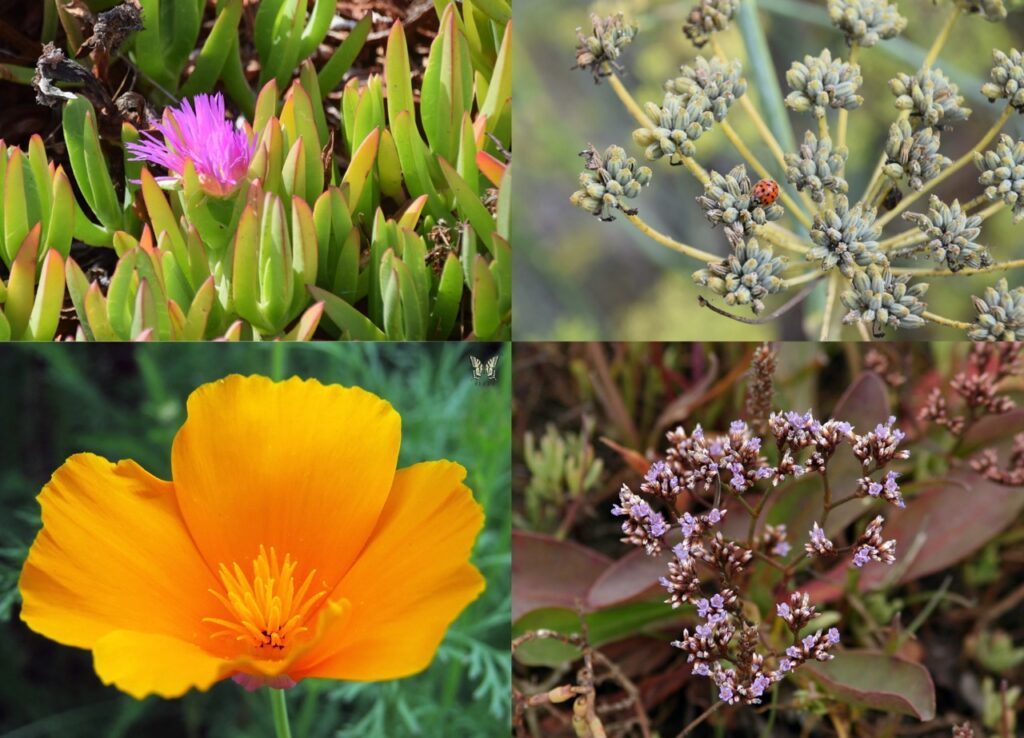
- Lots of plants grow near and on the Jetty, but not all of them belong here. Ice plant and fennel are invasive species that harm native plants, so park rangers are gradually working on removing them. Native plants around the jetty include California sea lavender and the golden poppy.
Know before you go:
- To get onto the shell beach, you have to climb over some boulders. The shortest and easiest route is right next to the sign at the end of the paving. (If you don’t want to climb, that’s okay! There’s plenty to enjoy from the path. Watch for sunbathing lizards among the boulders!)
- Because the Jetty sticks out into the Bay, the wind is usually much stronger there than it is up at CuriOdyssey. Extra layers can help you stay warm and comfortable.

Conclusion
While you’re exploring these special places, feel free to look, touch, listen, and smell. But when you’re done, please leave them as they are so others can enjoy them after you. Rocks, shells, bones, plants, animals, and other parts of nature should all stay here at Coyote Point. The Marsh, Rocky Beach, and Jetty will be waiting for you!
Resources for exploring Coyote Point:
Related Posts


Join the CuriOdyssey Community
LOCATION
1651 Coyote Point Drive
San Mateo, CA 94401
Ohlone Land Acknowledgement
650-342-7755
info@curiodyssey.org
CuriOdyssey is a 501(c)(3) non-profit, Tax ID 94-1262434